You could take those downvotes as an invitation to check if those other stories (environmental, economical, societal) hold up any better.
- Posts
- 119
- Comments
- 1271
- Joined
- 3 yr. ago
- Posts
- 119
- Comments
- 1271
- Joined
- 3 yr. ago
Technology @lemmy.world Linus Torvalds says AI has made 'huge' Linux kernel updates the new normal

Programmer Humor @programming.dev Seems AI generated?
Europe @feddit.org What France’s Under-15 Social Media Ban Means for Europe

Europe @feddit.org Peter Thiel to Receive the 2026 Axel Springer Award

Microblog Memes @lemmy.world Not Everything that is on Fire Should be Extinguished
Europe @feddit.org EU Mandates Driver-Facing Cameras in New Cars From Today
Europe @feddit.org Copyright challenges in open-source AI development in the European Union – Open Future
openfuture.eu /publication/copyright-challenges-in-open-source-ai-development-in-the-european-union/
Europe @feddit.org Anthropic disables top-tier AI models after US order limiting foreign access
Technology @lemmy.world New plans to stop children taking, sharing or viewing nude images

Technology @lemmy.world An OpenAI model has disproved a central conjecture in discrete geometry
Technology @lemmy.world Apple’s AirPods with cameras for AI are apparently close to production

Technology @lemmy.world Behind the Scenes Hardening Firefox with Claude Mythos Preview – Mozilla Hacks - the Web developer blog

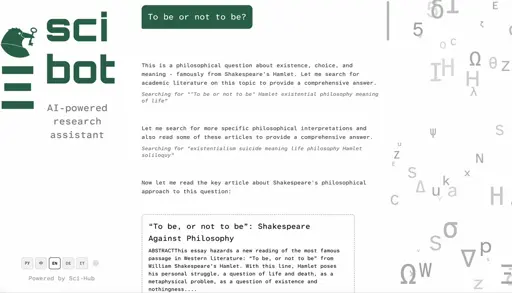
science @lemmy.world Sci-Hub has created a new AI chatbot. Is it any good?
Europe @feddit.org White House against Anthropic expanding Mythos model access: report

Europe @feddit.org Europe craves its own superhacking AI

Europe @feddit.org Commission preliminarily finds Meta in breach of Digital Services Act for failing to prevent minors under 13 from using Instagram and Facebook

Technology @lemmy.world Even experts are surprised by AI’s latest ‘vibe-mathing’ advance

memes @lemmy.world I'm enjoying the Perfect Date
Europe @feddit.org Siemens warns EU over restrictive rules

Technology @lemmy.world The zero-days are numbered | The Mozilla Blog


Like Anna's Archive, or Sci-Hub. Famously legal.
If only they uploaded everything to those archives, the scanning would be perfectly fiiiiine.