
www.concordia.ca Why Canada should avoid Australia’s teen social media ban: A call for better solutions | News - Concordia University

Why Canada should avoid Australia’s teen social media ban: A call for better solutions --
As of Wednesday, all youth under 16 in Australia will be banned from major social media platforms like TikTok, Instagram, Snapchat, YouTube, Reddit, Twitch, and X. For over a decade, whistleblowers, politicians, academics, and experts around the world have sounded the alarm about the online harms people of all ages are exposed to.
...
The ban does nothing to prepare teens to respond to digital harms. It makes no investments in education, community training, or parental support. Youth will not be magically prepared to address problematic online behaviours or content when they turn 16.
The time and resources spent on the ban could be better spent on things like providing education and support for digital citizenship, media literacy, privacy rights or resource centres.
If social media is problematic for a 13, 14 or 15 year old, it’s still likely to be problematic for a 16, 25, or 80 year old. There is no body of research that establishes 16 as a “safe threshold” for social media use
The case for EU-Japan ties and a 'Democratic 7:' EU, UK, Japan, South Korea, Australia, New Zealand, and Canada --

The war in Ukraine, North Korea’s missile tests, and China’s growing assertiveness reveal a stark truth: the EU needs to deepen partnerships with other democracies that share our values. And few countries embody this alignment more than Japan, writes Anders Fogh Rasmussen, former Danish PM and Nato ...

cross-posted from: https://mander.xyz/post/43442390
[Op-ed by Anders Fogh Rasmussen, a former prime minister of Denmark and former secretary general of Nato.]
...
The war in Ukraine, North Korea’s missile tests, and China’s growing assertiveness reveal a stark truth: the great divide of our age is not as geographic as it once was, but political and ideological. It is the fault line between open societies and autocratic ones.
For Europe, the imperative is clear: deepen partnerships with other democracies that share our values, our economic models, and our strategic outlook.
And few countries embody this alignment more than Japan.
...
Japan is not just a major economy in the Indo-Pacific — it is a democracy of principle, a strategic actor with advanced capabilities, and a steady partner in global security.
Over recent years, Tok
Canada’s global ambitions must begin with domestic protection --

Canada should engage globally. But there are legitimate debates to be had about who we align ourselves with.
...
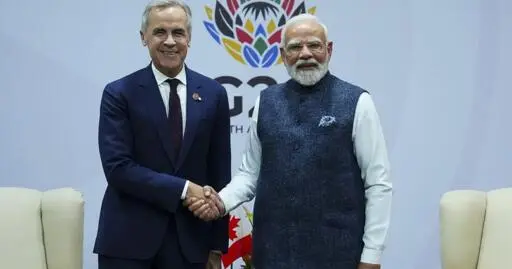
Just last week, Prime Minister Mark Carney met with the government of India to launch new trade negotiations. This is the same government former prime minister Justin Trudeau accused of involvement in killing a Canadian citizen on our own soil. Moreover, the RCMP claims to have evidence of Indian government “agents” engaging in extortion, intimidation, coercion and harassment.
Foreign actors have also targeted sensitive Canadian information and technological services we rely upon. At Ontario Power Generation, an employee was charged under the Security of Information Act for allegedly attempting to share safeguarded information with a foreign entity. At Hydro-Québec, a researcher was charged with obtaining trade secrets for the benefit of a foreign state. We must not become numb to persistent hacking attempts by hostile foreign states.
...
A
Canada’s research strength is world-class—now we need to all pull in the same direction -

Our innovation system remains fragmented. Partnerships between universities, industry and government are often too ad hoc, funding cycles are short, and incentives are often misaligned.
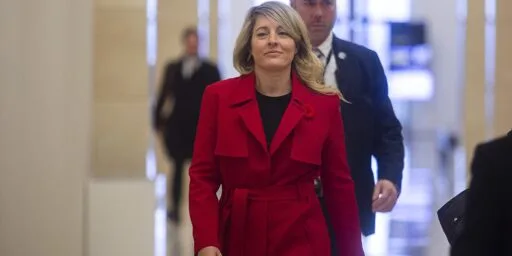
Op-ed by Benoit-Antoine Bacon, the University of British Columbia’s 17th president and vice-chancellor.
...
Across the country, collaborations ... are showing how universities can contribute to both economic resilience and social progress. But our innovation system remains fragmented. Partnerships between universities, industry, and government are often too ad hoc, funding cycles are short, and incentives are often misaligned. Thanks to support from provincial and federal governments, Canada’s research universities have built world-class capacity in discovery and innovation. The next step is to better align these strengths with national priorities. That means sustained public investment in research, stronger pathways to move discoveries into practice, and policies that foster long-term collaboration across sectors rather than short-term competition.
The next decade will test this country’s capacity to adapt. Whet
Could Canada be the Next Ukraine? Russia is Our Neighbour, Too -

When Canadians think about our neighbours, we generally think only of one: the United States. But we also have a neighbour to the North: Russia, whose

[Op-ed by Maria Popova and Anastasia Leshchyshyn, both researchers at McGill University.]
When Canadians think about our neighbours, we generally think only of one: the United States. But we also have a neighbour to the North: Russia, whose proximity has only been enhanced by the effects of climate change on the Arctic.
And we need to shift our assumptions quickly. With the terms of Ukraine’s future now being determined, the kind of Russia that emerges from the Russo-Ukrainian war is the one Canada will meet in the Arctic.
...
However, despite our mental maps fooling us otherwise, the North does not end with us; the Russian neighbour just across the Arctic Circle is much closer than we tend to realize.
Last week’s speech by CSIS Director Daniel Rogers should jolt Canadians from their North American preoccupations and reorient our attention to Canada’s Arctic with warnings that Russia and China have “significant intelligence interests” in the region.
Word of Russian prowling in
Canada’s age-verification bill for porn is a slippery slope to a restrictive internet

While its intentions are good, the proposed bill is riddled with problems and should not be passed

Canada’s proposed Bill S-209, which addresses online age verification, is currently making its way through the Senate, and its passage would be yet another mistake in tech policy.
The bill is intended to restrict young peoples’ access to online pornography and to hold providers to account for making it available to anyone under 18. It may be well-intentioned, but the manner of its proposed enforcement – mandating age verification or what is being called “age-estimation technologies” – is troubling.
Globally, age-verification tools are a popular business, and many companies are in favour of S-209, particularly because it requires that websites and organizations rely on third parties for these tools. However, they bring up long-standing concerns over privacy, especially when you consider potential leaks or hacks of this information, which in some cases include biometrics that can identify us by our faces or fingerprints. [...]
How Canada and the European Union could ensure the survival of the International Criminal Court --

Canada and the European Union could amend key laws designed to shield companies from American sanctions, which could significantly aid in the operation of the International Criminal Court.
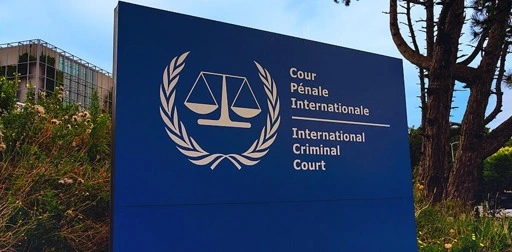
Canada has yet to officially throw its support behind the International Criminal Court (ICC), an institution it helped create, against targeted sanctions imposed on several prosecutors and judges by the United States earlier this year.
Four key staff of the court — including Canadian judge Kimberly Prost — have been sanctioned by President Donald Trump’s administration because of their involvement in investigations related to alleged war crimes committed by American and Israeli officials.
...
The current wave of sanctions has forced the court to take extraordinary measures, such as paying staff ahead of time and changing email software to openDesk which was developed by the Germany-based Centre for Digital Sovereignty.
Despite these safety measures, the court may not be safe from further punishment. The Coalition for the International Criminal Court (CICC has speculated the U.S. government may impose further sanctions against the entire organization.
This would mean that any Ameri
Canada and the EU are quietly reinforcing NATO’s northern flank --
This is an opinionated piece by Andrew Latham, professor of international relations at Macalester College in Saint Paul, Minn., a senior fellow at the Institute for Peace and Diplomacy and a non-resident fellow at Defense Priorities in Washington.
Addition to insert the official statement by the Canadian government: Security and defence partnership between the European Union and Canada
...
Canada and the European Union have signed a new Security and Defence Partnership focused on cyber defense, maritime security, hybrid threats and industrial resilience. It may sound like bureaucratic routine, but in fact it represents the next step in the evolution of Canada’s grand strategy: a consolidation of its northern vocation as an Arctic and North Atlantic power.
For yea
How China courted, cultivated, and cornered Ottawa: A Canadian political class eager for connections created perfect conditions for foreign interference -

A Canadian political class eager for connections created perfect conditions for foreign interference

[This is an op-ed by Dennis Molinaro, a former national security analyst and policy adviser for the Canadian government. A frequent media commentator on intelligence and foreign interference issues, he has taught courses on modern espionage, human rights law, and national security at several universities, including the University of Toronto.]
...
“Canada is back!” declared the country’s new leader, and so was the Liberal Party. Justin Trudeau was elected prime minister in 2015, and his declaration of Canada’s return might as well have been spoken directly to Beijing. He had campaigned on improving relations with China, making it a “top priority,” according to the Prime Minister’s Office. The next year, he made an official visit to the People’s Republic of China and began exploratory talks on a free trade deal, and—in a move that must have left Canada’s
Canada cannot cozy up to China: "Exposure to a regime that jails dissidents, manipulates international institutions and spies on Canadian citizens is not diversification. It’s submission" -

By Scott McGregor The Globe and Mail column, “Let’s free ourselves of the U.S. and forge closer ties with China”, by Julian Karaguesian and Robin Shaban, reveals a troubling lack of historical awar…

The Globe and Mail column, “Let’s free ourselves of the U.S. and forge closer ties with China”, by Julian Karaguesian and Robin Shaban, reveals a troubling lack of historical awareness and strategic judgment.
Marketed as a call for Canadian economic independence, it amounts to an argument for deeper dependence on an authoritarian regime that uses coercive diplomacy, illicit finance and political interference to erode democratic sovereignty.
Canadians should reject the notion that closer alignment with Beijing strengthens our independence. The opposite is demonstrably true.
The authors praise China’s economic dynamism and technological progress but ignore the context in which these gains were made. They are not the result of fair-market innovation, but of systematic intellectual property theft, forced technology transfers and vast state subsidies that distort global
Using China to hedge against Trump’s U.S. is less clever realpolitik than it is dangerous naivety -
The Hub’s twice-weekly politics and economics roundup
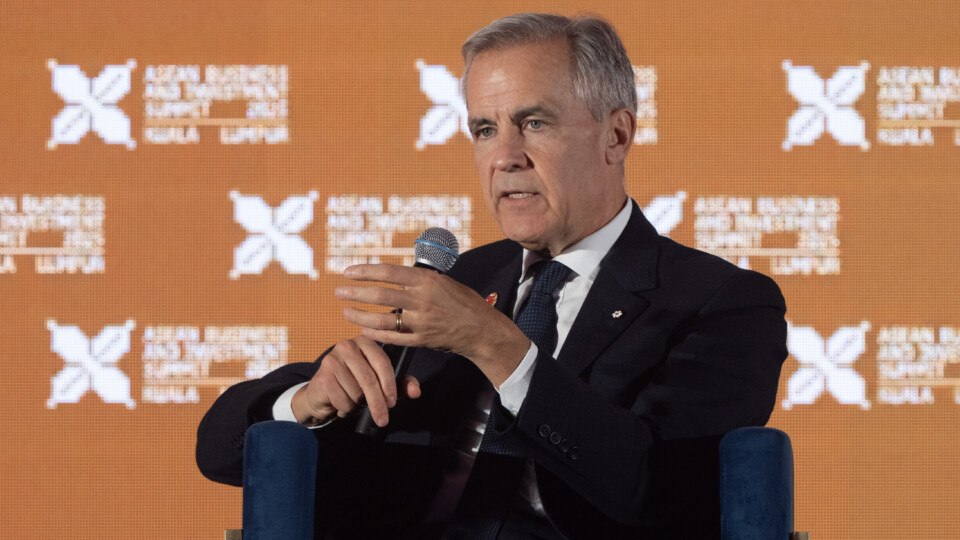
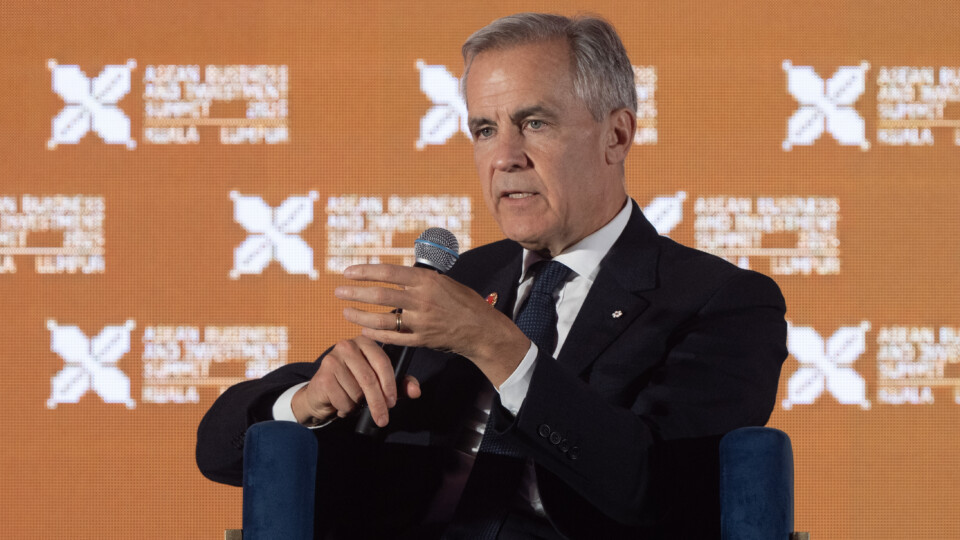
Prime Minister Mark Carney’s ongoing Asian tour signals a welcome shift in Canada’s regional engagement. After six months in office, Carney appears to understand what his predecessors missed: Asian leaders value consistency and realism over grand gestures and progressive rhetoric.
The Indonesian free trade agreement and pursuit of an ASEAN-wide free trade agreement demonstrate concrete progress. Canada’s participation in sanctions invasion exercises and provision of dark vessel tracking technology to the Philippines shows we’re serious about regional security. Our Taiwan Strait transits and intelligence cooperation send the right signals about upholding the rules-based order.
...
The elephant in the room remains China. From Seoul to Manila, our partners watch nervously as Ottawa signals renewed engagement with Beijing. They understand engagement is necessary, bu
Canadians must start caring about potential conflict between China and Taiwan, and press their political leaders to act on deterring such an outcome --
...
The impact of a Chinese invasion — or even blockade — of Taiwan would be felt around the world by governments, citizens, companies, and industries. Experts estimate an attempted invasion would decrease global GDP by 10 per cent, with a blockade having a significant but lesser impact. (For comparison, COVID-19’s impact reached just over three per cent of global GDP).
...
It’s anticipated that sanctions would be applied against China, halting the supply of “made-in-China” products to Canada.
Estimates vary, but this could affect 20 to 40 per cent of all consumer goods in Canada, significantly disrupting life, slowing activity and crippling the consumer economy.
America would likely be drawn in to a cross-straits conflict, and western democratic nations would muster to aid the U.S. and Taiwan. Economies would shift to wartime profiles, freezing development and other objectives.
The situation would worsen beyond description if regional conflict spiralled into global war — on the
Canada holds the upper hand in any canola deal with China --

Doug Firby • But will Ottawa use it?

...
China’s ambassador to Canada, Wang Di, says the solution is simple: if Canada drops the EV tariff, China will remove its agricultural tariffs. But Canada may not need to go that far.
China cannot easily replace millions of tonnes of high-quality Canadian seed. Imports from India and Australia don’t match the volume or quality, and Chinese futures markets are already showing strain. If farmers can weather the chill, Canada may have more leverage than expected.
...
Canadians can’t ignore China’s human rights abuses, from the treatment of Uyghurs in Xinjiang to the crackdown in Hong Kong. And trading dependence on Washington for reliance on Beijing is hardly a cure-all. Any deal must be negotiated from a position of strength, with safeguards to protect Canadian workers and sovereignty.
Which brings us back to canola. China needs it. We’re willing to sell it. But we don’t have to—nor should we—give away the farm.
Michael Kovrig: Don't buy the gaslighting, China's intentions towards Canada are hostile --

Don’t get stuck in the syrup. Decode the slogans. Remember that the CCP’s charm can turn to menace in a heartbeat
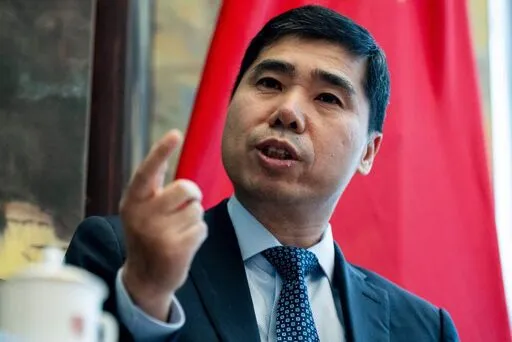
Michael Kovrig is Executive Director, StrategicEffects and Chief Executive, Kovrig Group SL, and a Canadian former diplomat.
China’s officials are sweet-talking Canadians. Its Ambassador, Wang Di, has given smiling interviews calling for the two countries to “have a correct perception of each other.” His other catchphrases include “mutual respect,” “win-win cooperation,” and “positive energy.” Appearing recently on CTV’s Question Period, he assured that current trade disputes would disappear if only Canada would drop its tariffs. Article content
After enduring several years of China’s abusive “wolf warrior” diplomacy, Canadians — particularly Foreign Affairs Minister Anita Anand, who is visiting Beijing this week — may be tempted to look for comfort in this syrupy language. But they should be wary, because while the Chinese Communist Party (CCP) and its envoys have altered their tone, their hostile intentions and harmful policies remain un
Canada must sanction the Chinese tech companies fuelling the horrors in Ukraine --

A growing list of Chinese companies have been exposed for supplying critical components to Russia's war efforts.

Op-ed by Marcus Kolga, founder of DisinfoWatch and a senior fellow at the Macdonald-Laurier Institute.
Almost every night since May, Russian missiles and drones – powered by Iranian designs and packed with Chinese components – have torn through Ukrainian schools, hospitals and homes, killing or maiming thousands in a ruthless campaign of terror. Those drones are now reaching further into Ukraine, striking apartment buildings in Lviv over the weekend.
In June alone, 5,429 Russian drones and ballistic missiles struck Ukrainian targets. According to the UN, they have caused more than 3,000 civilian casualties since the start of the war, with 232 civilians killed in June. Analysts warn that Russia could soon develop the capacity to launch up to 1,000 drones in a single night against Uk