Skip Navigation

You're viewing a single thread.

27 comments
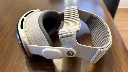
  • Can't believe they actually made another one of these things after the first one flopped so badly. And they changed nothing but the chip?

    Make a display that plugs into your already-wildly-expensive MacBook and you might sell a few...

    • Just to be fair, the MacBook pros are actually a tremendously good value if you actually need their power. I’d kill for a full Linux machine running on comparable hardware to their M5 processors.

      That said, it just reinforces that if they made a screen you needed to be plugged into your MacBook for (and for low power on the go, like watching a movie on a plane, you could have a small battery pack that lasts for a few hours and use your phone for the content), it would be an absolute thoroughbred for sales. You could offer it for 500-1000 dollars and folks buying 2 and 3 thousand dollar MacBook pros, or 1200 plus dollar phones, would tack that on like they do Apple Watches and AirPods. That should be their goal.

      Their mistake was trying to make a standalone product. They should’ve made a companion piece that was more affordable.

      • the MacBook pros are actually a tremendously good value if you actually need their power

        I mean sure, if you like spending $1500+ on a new computer every year...they're completely irreparable, unupgradeable, and they have a definite lifespan when Apple arbitrarily decides that they're "obsolete".

        • I mean sure, if you like spending $1500+ on a new computer every year…they’re completely irreparable, unupgradeable, and they have a definite lifespan when Apple arbitrarily decides that they’re “obsolete”.

          That was kind of Steve Jobs' original vision.

          folklore.org archives a lot of stories from the early Apple days.

          https://www.folklore.org/Diagnostic_Port.html

          Expandability, or the lack thereof, was far and away the most controversial aspect of the original Macintosh hardware design. Apple co-founder Steve Wozniak was a strong believer in hardware expandability, and he endowed the Apple II with luxurious expandability in the form of seven built-in slots for peripheral cards, configured in a clever architecture that allowed each card to incorporate built-in software on its own ROM chip. This flexibility allowed the Apple II to be adapted to a wider range of applications, and quickly spawned a thriving third-party hardware industry.

          But Jef Raskin had a very different point of view. He thought that slots were inherently complex, and were one of the obstacles holding back personal computers from reaching a wider audience. He thought that hardware expandability made it more difficult for third party software writers since they couldn't rely on the consistency of the underlying hardware. His Macintosh vision had Apple cranking out millions of identical, easy to use, low cost appliance computers and since hardware expandability would add significant cost and complexity it was therefore avoided.

          Apple's other co-founder, Steve Jobs, didn't agree with Jef about many things, but they both felt the same way about hardware expandability: it was a bug instead of a feature. Steve was reportedly against having slots in the Apple II back in the days of yore, and felt even stronger about slots for the Mac. He decreed that the Macintosh would remain perpetually bereft of slots, enclosed in a tightly sealed case, with only the limited expandability of the two serial ports.

          Burrell was afraid the 128Kbyte Mac would seem inadequate soon after launch, and there were no slots for the user to add RAM. He realized that he could support 256Kbit RAM chips simply by routing a few extra lines on the PC board, allowing adventurous people who knew how to wield a soldering gun to replace their RAM chips with the newer generation. The extra lines would only cost pennies to add.

          But once again, Steve Jobs objected, because he didn't like the idea of customers mucking with the innards of their computer. He would also rather have them buy a new 512K Mac instead of them buying more RAM from a third-party. But this time Burrell prevailed, because the change was so minimal. He just left it in there and no one bothered to mention it to Steve, much to the eventual benefit of customers, who didn't have to buy a whole new Mac to expand their memory.

          That being said, modern USB does represent a major change from that point in time, since it's a relatively-high-speed external bus, and USB does permit for some of the devices that historically would have needed to live on an internal bus to be put on an external bus.
        • If we are being fair, Apple doesn’t arbitrarily decide when something becomes obsolete, it is at 7 years for them when they retire hardware from support, that covers software as well.

          Also, MacBook Pros have a longer shelf life on average than PC counterparts, unless it is corporate not many Mac users are upgrading their hardware every year. I believe the average is every 3-5 years but I know people who are still using 10+ year old MacBook Airs as their daily driver for personal use.

        • Even though my PC use is now 75% Linux, I do still have an M2 MacBook Air. That thing is three years old and still as powerful as the day I bought it. Though to be fair, it's not running macOS 26, because fuck that.

          Their hardware is legitimately incredible. But as a company they're dog shit. Hence my 75% Linux use. If Asahi was as useful on my MacBook as Kubuntu on my desktop, I wouldn't be using my Air with macOS at all.

          • Sounds like you had a string of good luck. It'll probably break tomorrow.

            • The 2011 MacBook I still have that still works a treat (with Linux) was also an incredibly lucky purchase too, I guess.

              • Are we playing with anecdotes? Because I can give you dozens of examples of Mac hardware that had a minor issue that killed the whole thing because Apple either wanted to charge an exorbitant fee or outright refused to repair it.

        • In principle I agree with you. But have you seen the state of the rest of the industry? Framework stands out as a bastion of repairability, the rest is mostly garbage.

          I’d honestly expect a longer lifetime from a Macbook than almost anything else on the market at this point, especially if we are talking about high performance laptops for ”creative” work. You know, apart from an old Thinkpad, those machines are invincible.

          • "The rest of the industry" is an extremely large generalization. Some of them are nearly as bad, many of them are not.

            No one else invents new screws to prevent access (except Nintendo). No one else puts in their contracts that their manufacturers can't sell components to anyone else. No one else serializes components so that you can't swap parts from a donor board. I could go on.

            • No one else invents new screws to prevent access (except Nintendo).

              Like, on gamepads? I have multiple sets of security bits that I bought just to get required bits to open gamepads, and I've never owned a Nintendo gamepad.

              • Security bits are in use all over the place. They sell them at harbor freight. Not really specialized.

27 comments