


Pretty straightforward: books and literature of all stripes can be discussed here.
If you're interested in posting your own writing, formal or informal, check out the Writing community!
This community's icon was made by Aaron Schneider, under the CC-BY-NC-SA 4.0 license.
Giant of the Attic: On the Majesty of Alan Moore
Alan Moore is 72 years old now. Since the 1980s, he’s been celebrated as the greatest writer in comics history. But he’s done with all that. Full-time novelist now. Finally. Spends his days at home just writing, reading, and smoking “frightening,” “staggering,” “saturating” amounts of weed.
“I use it to work,” as he told Alex Musson. “Always have done.”
Except these days he does it without the weekly deadlines, the phone always ringing, questions and chitchat with illustrators, coauthors, publishers, press — none of it.
Life of a novelist now. Solitude.
And he’s embarked on something new: a five-novel series called The Long London. It might not seem like a huge venture, given that Book One, The Great When (2024), reads as a fairly straightforward fantasy story, just about 300 pages, self-contained, quick-moving, irreverent.
But it marks a big change for Moore.
There’s no illustrator for this series. No coauthor. No photos to pair with the text. It’s got none o
The idea of 100 Notable Small Press Books was born November 2024, after The New York Times’s annual 100 Notable Books list featured eighty-two books from the Big Five publishing houses (Pengu…
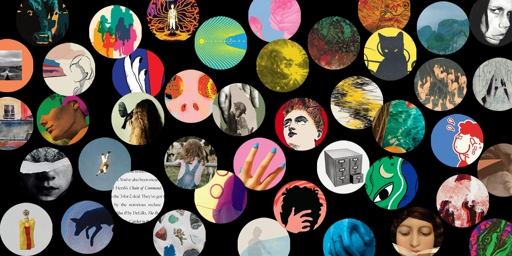
The idea of 100 Notable Small Press Books was born November 2024, after The New York Times’s annual 100 Notable Books list featured eighty-two books from the Big Five publishing houses (Penguin-Random House, Hachette, Harper Collins, Simon & Schuster, and Macmillan) and their imprints. Many of these books had the marketing might of these publishers behind them and had already made their way onto the front tables of chain bookstores and the front pages of dwindling book review sections in print and online. The Notable list then, with all its esteem and future marketing power, served largely as a retrospective of the year’s biggest literary books.
Of the eighteen independently published books on the 2024 list, nearly a third were released by Grove/Atlantic, a mid-sized indie that publishes around 100 combined frontlist and paperback books per year, or W.W. Norton, which publishes even more than that. This meant only 11% of the New York Times‘s “notable books” were released by small
Why it might have been and may continue to be harder to get new releases from your local library.

One of the largest distributors of print books for libraries is winding down operations by the end of the year, a huge disruption to public libraries across the country, some of which are warning their communities the shut down will limit their ability to lend books.
“You might notice some delays as we (and more than 6,000 other libraries) transition to new wholesalers,” the Jacksonville Public Library told its community in a Facebook post. “We're keeping a close eye on things and doing everything we can to minimize any wait times.”
The libraries that do business with the distributor learned about the shut down earlier this month via Reddit.
Baker & Taylor has been in the book business just short of 200 years. Its primary focus was distributing physical copies of books to public libraries. The company also provided librarians with tools that helped them do their jobs more effectively related to collection development and processing.
But the company has spent dec
A book vending machine provides an outlet for D.C.-area authors after funding cuts
A vending machine in Washington, D.C., is providing nourishment — for the mind. LitBox is filled with books by local authors, just steps from the White House, World Bank and International Monetary Fund.
Lauren Woods launched the project in May after growing frustrated with what she saw as some publishers' focus on sensationalism and the lack of bookstores focused on local authors in the area. "I had friends who wrote award-winning books and couldn't get their books into D.C. bookstores because they were smaller presses, or they didn't have a mass appeal, or the book buyer didn't think they would be profitable," Woods said. "And that always seemed wrong to me."
Inspired by a European book vending machine, she set about planting one in the nation's capital to try to market books more equitably and see how they sell. The hypercompetitive publishing industry makes it challenging for some books to get into stores, and Woods wants those she still finds excellent to get to readers. "
E-Book Contracts Are a Big Cost for Public Libraries. One Harvard Librarian Is Fighting to Change That.

For the past five years, Kyle K. Courtney, who directs copyright and information policy for Harvard’s libraries, has fought to make e-books more accessible to public libraries across the United States.

Most e-books have digital rights management software that means, like print books, they can only be checked out by one person at a time. But unlike print books, which can sit on library shelves for decades, e-books are often sold on time-limited contracts — meaning public libraries must buy them again after several years or, in some cases, several months. The costs can add up quickly.
Courtney, a lawyer by trade, believes that the strict contract terms are “undermining every library’s mission across the United States.”
“We can’t own our books. We can’t preserve them. We can’t keep them. We can’t check them out without having to pay for the same book over and over and over,” Courtney said. “And that’s problematic for collection development, for access, for budget, for all sorts of things.”
Courtney leads a nonprofit called the eBook Study Group that lobbies state governments to adapt e-book contract regulations to reflect existing consumer and contract law. Since its 2020
Last Sunday I spent hours at the Brooklyn Book Festival, a too rare occasion for me to pull myself away from the internet for an entire afternoon. As I looked around at the crowd on their way to pa…

Last Sunday I spent hours at the Brooklyn Book Festival, a too rare occasion for me to pull myself away from the internet for an entire afternoon. As I looked around at the crowd on their way to panels or checking out indie press booths, I was reminded that, even if it doesn’t always seem apparent from looking at news headlines, there are many, many of us out there: people who care about books and culture and their community in general.
The previous weekend I had gone to Cleveland to give a talk about literary citizenship. It’s an amorphous kind of concept, often changing with the moment, but needed more than ever today when corporate interests have a stranglehold on the arts, literary institutions are being devastated by the cancellation of NEA grants, and the freedom to read is under attack. As people who care, and if you’ve read this far I suspect you care, I figured we could all use a refresher on how to be a good literary citizen. Below you’ll find my top seven tips on how

There’s been a revolution in children’s storytelling—and it’s not just that the stories are more diverse.

On Oct. 8, 2010, the New York Times ran a story on its front page: “Picture Books No Longer a Staple for Children.” As we interviewed children’s publishing professionals while compiling this list, several told us they remembered exactly where they were when they read this death knell for their industry. The Times wasn’t wrong: Sales were down, especially of new books. Once upon a time, an adult shopping for a child might have bought a classic they remembered from their own childhood, and also a new book, recommended by a bookseller. More and more, buyers just went for the classic—almost always Seuss or Sendak—and new books languished on the shelves.
But, feared a number of ambitious authors and illustrators, the art form’s struggles couldn’t simply be blamed (as the Times suggested) on achievement-obsessed adults pushing chapter books too early. Picture books were struggling artistically too. The next year, a group of 21 creators issued a picture-book manifesto. “WE BELIEVE,” the

Doomscrolling. Poor literacy instruction. Overscheduling. These are some of the reasons cited for a generational decline in students reading for fun.
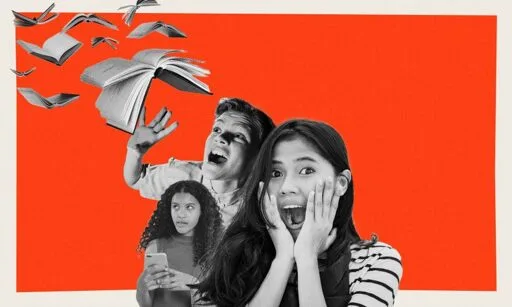
Over the course of two generations, from 1984 to 2023, the proportion of 13-year-olds who said they “never or hardly ever” read for fun on their own time has nearly quadrupled, from just 8% to 31%.
During that time, the percentage of middle-schoolers who read for fun “almost every day” has fallen by double digits, according to surveys conducted for the National Assessment of Educational Progress, the test widely known as “the nation’s report card”: In 1984, 35% of middle school kids read for fun almost every day. By 2023, it was just 14%.
The phenomenon is part of a larger shift away from reading, research suggests. A new study from the University of Florida and University College London found that daily reading for pleasure has dropped more than 40% among all age groups over the last two decades, “a sustained, steady decline” of about 3% per year.
Findings like these have sparked fears that, after more than a century of steadily expanding literacy, reading is devolving i

August 12th marks the 65th anniversary of Dr. Seuss’s Green Eggs and Ham, a book whose orange cover fills me with delicious nostalgia. Svetlana Boym defines nostalgia as “a longing for a home that …

August 12th marks the 65th anniversary of Dr. Seuss’s Green Eggs and Ham, a book whose orange cover fills me with delicious nostalgia. Svetlana Boym defines nostalgia as “a longing for a home that no longer exists or has never existed.” What imaginary home do I miss so much? And why do so many of us miss this same place?
As a children’s librarian who also teaches a graduate course on the History of Children’s Literature, I struggle with the question of how to present Dr. Seuss, aka Theodor Geisel. It is now widely known that Geisel’s political cartoons during WWII and early children’s books contained offensive depictions of Asian, Arctic Indigenous, Middle Eastern and African people.
My students of all ages devour Seuss. In my library in Queens, NY, kindergarteners through second graders clamor for Green Eggs and Ham after binge-watching the 2019 Netflix series of the same title (and all the Grinch and Lorax movies too). I will confess: when Random House offered my school the
A Portrait of the Artist as a Young Man
I had a strange mood today and started and finished this in one 10 hour sitting. It was excellent, but simultaneously not as excellent as I had hoped. I enjoyed lots of the short stories in Dubliners more, I think. The "avant garde" structure often felt superfluous - although not always. The color symbolism was interesting, but I felt it fell away in the second half of the book. In fact, the entire middle portion (those gigantic sermons, my god!) was a bit rough to get through. But I do appreciate that it really evoked the sensation of being in a washed out, weary, hypnosis sort of state - and it did leave a psychological impression in the following sections, like you really "remembered" that part of Stephen's life. The discussion on Stephen's philosophy of art was the highlight for me, along with a bunch of tiny little fragments of test that felt like beautiful lucid clear thoughts. It did evoke the feeling of going through life in a largely automatic blur, with a few powerful moments

I was six hundred miles into a two-thousand-mile road trip, doing jumping jacks at a rest stop in Ohio to wake myself up, when my phone buzzed with the update I’d been dreading. The U.S. Court of A…

The stores I’ve stopped in are all different, with their own stock and their own personalities. There are stores on tree-lined streets, and in urban centers, strip malls, old homes, and refurbished warehouses. Once, I pulled into a dirt parking area convinced I was lost, until I saw a bright awning confirming there was indeed a bookstore there. Yet no matter where I went or how far from home I traveled, I felt welcomed every time I stepped inside. I was reminded that I’m part of a community that transcends geography and countless divisions—a community of people who read. Regardless of our favorite books or chosen genres, we believe in the value of language, creativity, and communication.
At Bookery Cincy in Ohio, Sierra told me about an annual bookstore crawl across the city, and how what had started with just a few stores now has two dozen places participating. At Joy and Matt’s, also in Cincinnati, Joy and I swapped book recs (she told me to read Amor Towles, I said I couldn’t
Black speculative poetry works this way too. It’s text that is flexible and immediate. It’s a safe space to explore Afrocentric text rooted in story, song, dance, rhythm that natural flows from my …
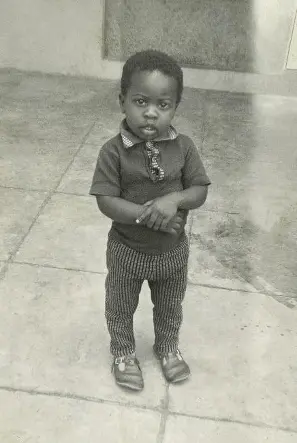
I am African Australian—the one is not exclusive from the other. I am a daughter of the Wajita people of Tanzania, and now I live in Melbourne, Australia. I am a daughter of the land that belongs to the Wurundjeri and Boon-Wurrung people of the Kulin Nation. The creative space where I tell stories is literary speculative fiction: I write and perform short stories, novels, novellas, prose poetry, creative nonfiction. I write across genres.
The road to publication has, for me, been fraught because I was not always at ease with the self and other—until I realized the power of fiction. Speculative fiction is a safe space that can, like any fiction, help us understand other perspectives. It allows for a different kind of writing with foundations to cultivate inclusive worlds.

Accessing reading material in prisons is hard, but Freedom Reads co-founder Reginald Betts, a former inmate, went beyond books, creating libraries made by former prisoners.

Maria Montalvo speaks with emotion, her eyes shining as she recounts her reading experiences. She says she especially enjoys books by Isabel Allende, Octavia Butler, Toni Morrison, Erika L. Sánchez and John Grisham because, in her words, “reading makes you wiser and you learn how people live in other countries. It takes your mind to other places you can’t travel to.”
Montalvo isn’t an ordinary reader. During her incarceration at Edna Mahan Correctional Facility, a prison in New Jersey, she has participated in the activities of Freedom Reads, a nonprofit organization that has been promoting reading in U.S. prisons since 2020.
“Freedom Reads has brought books on different topics, and it’s very important to read because it makes you wiser,” Montalvo, 60, said in an interview with Noticias Telemundo. “Books change the prison climate; they change the way people think about themselves. This opens your mind and makes you want to change.”
The real Salt Path: how a blockbuster book and film were spun from lies, deceit and desperation

Penniless and homeless, the Winns found fame and fortune with the story of their 630-mile walk to salvation. We can reveal that the truth behind it is ve...

When I first call Ros Hemmings, I expect her to be surprised. A widow in her 60s living in rural North Wales, she has never received a call from an investigative journalist in London. But instead she tells me: “Oh no, I have a very good idea why you are ringing.” She has been waiting for this call for years.
Hemmings rightly suspected that I wanted to ask her about a woman she knows as Sally Walker. Millions of people around the world know Sally by a different name: Raynor Winn. She is the author and protagonist of one of the most successful British non-fiction books in recent years. The Salt Path traces Raynor and her husband Moth’s 630-mile journey along the sea-swept South West Coast Path.
A heartbreaking “true” story of two people in their early 50s forced out of their rural home in Wales and weighed down by a sudden diagnosis of Moth’s terminal illness, The Salt Path went straight to the top of the bestseller charts, selling more than 2m copies worldwide since its
Barbara Kingsolver on Appalachia

This powerful reimagining of David Copperfield follows one boy’s struggle to survive amid America’s opioid crisis

Barbara Kingsolver points out that Trump’s “so-called Big Beautiful Bill” could be devastating for Appalachia, with its cuts to the National Park Service, the Weather Service and disaster preparedness – just last year the area was hit by the devastating Hurricane Helene – and cuts to Medicaid, which could cause havoc in an already under-served area. “The damage will be unimaginable. Lots of people will die, lots of wild lands will be destroyed. The damage is terrifying.” Does she think her Trump-voting neighbours will change their allegiance if such terrors come to pass? “Will they connect the dots when our hospital closes? I don’t even know the answer to that,” she says, shaking her head, fearing that the TV and radio stations that told them to vote for Trump in the first place will “come up with some other reason why your hospital closed. For those of us who are in the information business, that’s a depressing subject.”
A Rant About “Technology”.Ursula K. Le Guin

Ursula K. Le Guin on the presence of technology in her work

Anybody who ever lighted a fire without matches has probably gained some proper respect for “low” or “primitive” or “simple” technologies; anybody who ever lighted a fire with matches should have the wits to respect that notable hi-tech invention.

J.D. Beresford’s The Hampdenshire Wonder is generally considered to be the first fictional treatment of superhuman intelligence, or “superintelligence.” This is a familiar trope for readers of scie…
Nowadays we associate the word “prodigy” with precocious children, but in centuries past the word was used to describe anything monstrous. Victor Stott clearly qualifies as a prodigy in the modern sense, but he qualifies in the older sense too: Not only does he frighten the ignorant and superstitious, he induces a profound terror in the educated and intellectual. Seen in this light, the first novel about superintelligence is actually a work of horror SF, a cautionary tale about the dangers of knowing too much.

To Penguin Random House, HarperCollins, Simon & Schuster, Hachette Book Group, Macmillan, and all other publishers of America: We are standing on a precipice. At its simplest level, our job as …

We are standing on a precipice.
At its simplest level, our job as artists is to respond to the human experience. But the art we make is a commodity, and our world wants things quickly, cheaply, and on demand. We are rushing toward a future where our novels, our biographies, our poems and our memoirs—our records of the human experience—are “written” by artificial intelligence models that, by definition, cannot know what it is to be human. To bleed, or starve, or love.
AI may give the appearance of understanding our humanity, but the truth is, only a human being can speak to and understand another human being. Every time a prompt is entered into AI, the language that bot uses to respond was created in part through the synthesis of art that we, the undersigned, have spent our careers crafting. Taken without our consent, without payment, without even the courtesy of acknowledgment.
In our writing, we drew on our lives: the losses of our parents, the births of our children, ev